There are two groups of people I’ve yet to see anything approaching intelligence about manufacturing—politicians and journalists.
M.G. Siegler writes in his latest newsletter about the new pressures from the Trump administration to get Apple to manufacture iPhones in the US. These politicians seem to think there is a magic wand that will immediately set up factories, find workers, build automation, establish supply chain, and start production at a competitive cost.
Now we know what the magic wand is—AI.
Siegler quotes:
White House trade advisor Peter Navarro criticized Apple CEO Tim Cook on Monday over the company’s response to pressure from the Trump administration to make more of its products outside China.
“Going back to the first Trump term, Tim Cook has continually asked for more time in order to move his factories out of China,” Navarro said in an interview on CNBC’s “Squawk on the Street.” “I mean it’s the longest-running soap opera in Silicon Valley.”
I first ran across Siegler when he wrote for Michael Arrington’s old TechCrunch website. He then became a VC for a while after Arrington sold TechCrunch. He’s on his own, now, writing about technology, especially Apple, and entertainment.
Siegler continues:
On one hand, it’s sort of wild that the administration has zeroed in on Apple here given not only all of Cook’s legwork over many years now to get into the President’s good graces, but also because the entire idea of manufacturing the iPhone in the US is just pure crazytown fantasy. Even if it were possible for Apple move such manufacturing, it would take years to get all the pieces up and running. And it would all-but destroy Apple’s business as we know it today because it would destroy the economics of their most-important device.
Siegler then offers advice to Tim Cook:
It’s not that complicated. Cook should just say they’re going to move iPhone manufacturing to the US – and then never actually follow through with it. Sure, this takes some amount of soul-selling to do, but honestly, we’re past that point already. How many other companies have promised things to give the President a good soundbite that simply are not going to happen? Undoubtedly a lot.
But then Navarro has a simple solution:
With all these new advanced manufacturing techniques and the way things are moving with AI and things like that, it’s inconceivable to me that Tim Cook could not produce his iPhones elsewhere around the world and in this country.
So, all of you manufacturing technology geeks who read my musings, what are you doing? Why haven’t you used AI yet to magically reduce manufacturing costs and smooth the supply chain and source materials?
Am I being sarcastic? Those are all questions (except the AI part) I wrestled with 50 years ago. I bet you are all wrestling with them today. Every day. As we used to say, it’s nontrivial.
I’ve never lived in a gated community with people only like myself. I grew up in a small village where I associated with a wide variety of people. I’m glad I became more cosmopolitan over the journey of my life, but I maintain my history of associating with just about anyone.
I bring this up partly over the little media splash caused by Apple’s shareholders overwhelmingly voting down a proposal put forward by a conservative “think tank” to specifically end Diversity, Equality, and Inclusion (DEI) policies. I have never seen where Apple has ever had such policies as defined by current discussions.
In the National Lampoon seasonal classic movie, Christmas Vacation, Clark explains to Ruby Sue that “Christmas means something different to everyone…”
Similarly, DEI means something different to everyone.
Some organizations implemented a version of the initiative that was clearly meant to be discriminatory toward white men. A solid voting block for our current President was white men who had not been to college. Therefore a call to end those practices seen as discriminating fits a solid political payoff. That’s just politics as expected.
My observation is that not all DEI programs were purposely discriminatory toward white men. I don’t think all programs were as over the top as some elite organizations. Studies show that the best operating teams include people from a diversity of backgrounds, genders, races, ages.
The best companies are going to hire the best candidates for the position while encouraging a diverse set of applicants.
From my youth I have bought into Martin Luther King’s thought, “I have a dream that my four little children will one day live in a nation where they will not be judged by the color of their skin, but by the content of their character.”
I have a dream that that holds for everyone (with no qualifiers).
[By the way, this is the 3,600th post on this blog. Thank you for reading. It just keeps growing even though manufacturing and production in general seem to have been enduring a little period of stagnation.]
Many years ago, my health insurance would not pay for a routine annual physical checkup. I thought that was just about the stupidest thing imaginable. Long a student (and practitioner) of fitness, wellness, and health, I viewed prevention and early detection as essential ingredients of what is now called a healthspan.
Then two emails came my way in a span of 12 hours on this topic and more. Please read these and spread the word. Our Congresspeople appear to be pretty powerless right now. Maybe some will have the courage to take up the battle. Maybe if enough of us continue to raise the alarm, some changes will happen.
And we do need change.
The Peter Diamandis newsletter came yesterday. I appreciate what he has to say even when I sometimes find him a little over the top optimistic or disagree with him.
He begins the newsletter with a story and a point:
On January 7th at 11:30am, I looked out my home-office window to see black plumes of smoke billowing over a nearby hill. My first thought: What the hell is going on?
That was the beginning of a 5-week forced evacuation from our Santa Monica home, on the boarder of Pacific Palisades.
I’m writing this from a friend’s home, where we’ve taken refuge. We’re among the lucky ones – our house is still standing. But more than 18,000 homes have been destroyed, and 200,000 Angelenos have been displaced. The devastation is estimated between $100 billion to $200 billion, and honestly, I think that’s a low-ball estimate.
But here’s what really pisses me off: This was preventable. ALL of it.
This is happening because we’re stuck with systems and institutions that are centuries old and business models that are sub-linear and fundamentally broken.
Take the insurance industry, it’s perverse and inappropriately incentivized.
Read the entire essay with his proposed solutions.
Godin provides a list of problems with the healthcare system. He concludes:
And so, a system that’s organized around treatments and status, that misallocates time and effort, causing stress for practitioners and patients. Historical bias in training leaves more than half of the population underserved and unseen, and, as a result, stress is high, many people don’t get the right treatment or hesitate to get any treatment at all, and costs continue to rise.
Systems change is difficult, because persistent systems are good at sticking around. They create cultural barriers that make their practices appear normal, and there are functional barriers as well.
When a change agent (often an external technology or event) arrives, the system must respond, often leading to change. All around us, we see systems changing, and often, that change agent is the smart phone. 91% of adults in the US have a smartphone, and it’s even higher among people under 65.
He then postulates a smartphone app:
The ubiquity of the connected supercomputer in our pockets has overhauled the taxi industry, the hotel business, restaurants and most of all, pop culture. But it hasn’t transformed the healthcare system. Add AI to the mix, and it’s possible that change is about to happen.
Imagine an app.
He continues with a list of possibilities. I’m not going to reproduce them. Visit his blog page. It’s thoughtful.
His conclusion.
The biggest information shift here is the more accurate collection and correlation of symptoms and treatments. The secondary (but ultimately longer-term) shift is finding threads of common interest and comparing doctors in their responses to symptoms. (And the side effect of giving patients agency and the solace that comes from insight can’t be ignored). Because both of these data shifts will lead to better patient outcomes (usually at much lower cost, with less trauma) the healthcare professionals who signed up for precisely this outcome will also thrive.
It’s not a panacea. But shifting information flows, improving peace of mind and the quality and timing of diagnosis are problems we can work to solve.
When I was yet a wee lad, my grandfather told me stories of his days as a production superintendent at a GM plant. I learned about process, flow, how you can never make up for lost production due to downtime. He told me how he reorganized the plant at the beginning of World War II to manufacture machine gun bolts for aircraft. Dad was an accountant, but he sometimes told me about sales engineers that came to his plant to help fix machines.
Years ago when I had a sales engineering position, one of my customers was a US Army armaments plant. They built the Abrams M1 tank. I once quoted a job to upgrade equipment that painted the camouflage pattern. Just as I turned in the quote, Bush I invaded Kuwait. All the tanks were painted a single color—Desert Sand.
Even though I’m an internationalist in many ways, I recognized the crucial interplay of manufacturing and national defense.
This prelude leads to a report released by Michael Bloomberg called Strategic Edge: A Blueprint for Breakthroughs in Defense Innovation. This privately commissioned report addressed the challenges facing America’s strategic defense posture. Chaired by General David Berger (USMC, Retired), the report offers a new avenue for restoring the nation’s military and industrial edge through innovation and strategic investments.
If you are American, then this is a report worth reading and contemplating. What can you as a manufacturing professional do? If you are not American, not to worry, the same thoughts apply to your country.
This blueprint provides actionable solutions to counter decades of erosion in America’s ability to deter adversaries. With contributions from leading defense experts and technologists, the report emphasizes the urgency of rebuilding the industrial base, leveraging non-traditional innovators, and unlocking private capital to accelerate the fielding of emerging technologies. It recommends the Department of Defense do this by divesting 15% of its budget from its current portfolio of aging, legacy systems, and investing it in a new, separate pipeline for critical technologies.
I am not sanguine about the ability of our national government to spur manufacturing growth. The first Trump administration had a few big PR photo ops. How many of those plants are actually operating? The Biden administration observed the critical need for domestic semiconductor manufacturing. Big PR ops. Oops, they partnered with Intel (had to, what other US semiconductor manufacturer is there?). Even directing investment isn’t often successful.
Yet, we must remain optimistic, for what alternative have we?
Summarizing the highlights:
Field Emerging and Critical Technologies by Creating an Alternative Pipeline: The U.S. must establish an alternative procurement pipeline to rapidly acquire and deploy critical technologies at scale, ensuring direct operational impact and strategic advantage for warfighters.
Restore U.S. Manufacturing as a Global Powerhouse: The U.S. must invest in dual-use manufacturing technologies, leveraging advanced practices to enable scalable production of both commercial and military goods, ensuring adaptability and resilience during conflict.
Attract, Train, and Retain Talent for Our Nation: The U.S. must cultivate a skilled, innovative workforce that thrives in both the public and private sectors, supported by a DoD culture that values expertise, adaptability, and national security impact.
Shift DoD Resources to Innovative Programs and Unlock Private Capital: The DoD must redirect up to 15% of its budget from legacy systems to emerging technologies, reducing risks to attract private capital and accelerate innovation.
As the report warns, the U.S. faces an unprecedented challenge in adapting its defense systems to modern threats. Without immediate action, there is a tangible risk of losing the next major conflict.
“We’re at a critical turning point that has been building for decades and we must quickly change how things work at the Department of Defense,” said Michael R. Bloomberg. “We can’t afford to wait to take urgent action, and we can’t be afraid to upset the apple cart. Without taking the kinds of steps outlined in this report, the U.S. faces grave risks to our security, our freedoms, and our position in the world.”
General David Berger added, “Our adversaries are outpacing us in speed, scale, and capability. This report is a call to action for a whole-of-nation effort to reverse this trajectory and ensure America’s strategic superiority.”
The report also includes legislative recommendations aimed at enabling decisive changes in defense innovation policy. These proposals focus on creating alternative funding pipelines, addressing supply chain vulnerabilities, and fostering public-private partnerships to mobilize resources efficiently.
The release of Strategic Edge aligns with broader efforts to modernize the Department of Defense and foster collaboration with allies and private industry. It signals a pivotal moment for stakeholders across government, industry, and academia to come together and secure the future of national defense.
Rethink Robotics, founded by Rodney Brooks of iRobot fame in 2008, pioneered the concept of robots working collaboratively with humans. Here are a few previous posts.
New Products at IMTS–Side note: Reacher and Riser are not as cool as the original Sawyer and Baxter, but interesting that they came back.
Now the Hahn Group, who acquired the assets in 2018, has decided to revive the company. It has announced a female team to lead the company back into the market.
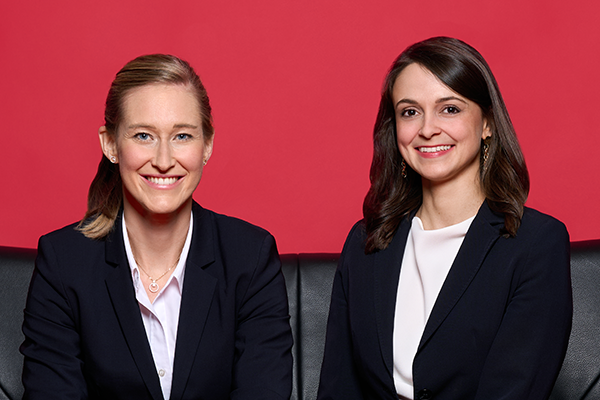
Following a successful launch of the company’s new product portfolio at the International Manufacturing Technology Show (IMTS) in Chicago, Rethink Robotics Inc., the United States pioneer of collaborative robots, recently named a new all-female leadership team. Effective immediately, Julia Astrid Riemenschneider has been appointed chief executive officer and Franziska Lorenz chief operations officer. With these appointments, Rethink Robotics becomes the first and only player in the field of collaborative robotics with two women at the helm.
Julia Astrid Riemenschneider, CEO, Rethink Robotics (left) and Franziska Lorenz, COO, Rethink Robotics
In these new roles, top priorities for Riemenschneider and Lorenz will be to deliver pioneering technologies in collaborative robots, oversee the installation of Rethink Robotics’ North American headquarters, and expansion of the team. By the end of 2025, the company plans to triple its team size, open a U.S. headquarters, and relocate robot production from Europe to the United States.
The newly introduced product line now includes collaborative robots in payloads ranging from 7 to 30 kg, two autonomous mobile robots (AMR), and a mobile manipulator (MMR) platform. The robots are designed for increased precision, speed, and reliability, making them highly capable for industrial applications.
As CEO, Riemenschneider is responsible for managing all customer-facing related departments, including marketing, sales, business development, product development, and application engineering. Riemenschneider brings more than 10 years of business development experience in industrial automation. Prior to Rethink Robotics, Riemenschneider worked for United Robotics Group in Europe and the United States, growing the business development organization. Previously, she worked in the United States for an international sensor manufacturer, following Europe-based business development roles with a machine vision manufacturer, and collaborative robot market leader Universal Robots.
Franziska Lorenz, previously responsible for corporate development and compliance at HAHN Automation Group, United Robotics Group, and Schenck Process Group, holds a master’s degree in international business administration. She brings extensive international experience from her studies and professional work in Italy, Spain, and Mexico. Recently, Lorenz spent 18 months at Robotnik, a manufacturer of in- and outdoor mobile robots in Valencia, Spain, successfully managing their integration in the group.
In her new role as chief operations officer, Lorenz will be managing HR, finance, production, and service and is looking forward to creating a diverse team as the foundation of success.
“As a newly U.S.-based company, Rethink Robotics is thrilled to contribute to the creation of high-tech American jobs. Our mission is to offer opportunities for skilled and driven professionals to innovate with collaborative robots, addressing the challenges faced by modern manufacturing. The new Rethink Robotics leadership team brings significant industry knowledge and strong business acumen,” said Thomas Hähn, founder of HAHN Automation Group and United Robotics Group, and Rethink Robotics’ president. “With Riemenschneider and Lorenz in these leadership roles, we are well-positioned to execute this fast growth phase as a leading robotics provider.”
I researched the company’s history with a little help from claude.ai.
Rethink Robotics was a pioneering robotics company founded in 2008 by Rodney Brooks, a renowned roboticist and former director of MIT’s Computer Science and Artificial Intelligence Laboratory (CSAIL). The company was originally called Heartland Robotics and was based in Boston, Massachusetts.
Key milestones in its history include:
1. In 2012, Rethink Robotics introduced Baxter, a groundbreaking collaborative robot designed to work safely alongside human workers in manufacturing environments. Baxter was notable for its affordable price, user-friendly interface, and built-in safety features.
2. In 2015, they launched Sawyer, a more precise, smaller single-arm robot aimed at more intricate manufacturing tasks.
3. Despite innovative technology, the company struggled financially and was unable to achieve widespread commercial adoption of its robots.
4. In October 2018, Rethink Robotics ceased operations and was acquired by the German automation company HAHN Group.
The company was significant in advancing the concept of collaborative robotics, demonstrating that robots could be designed to work more intuitively and safely alongside human workers, particularly in small and medium-sized manufacturing settings.
John Gruber’s Daring Fireball consistently provides a perceptive view into the tech industry. This post dives into the situation at Intel and how Pat Gelsinger was forced out.
The Verge’s Sean Hollister penned an excellent high-level summary of how Pat Gelsinger wound up getting forced out of Intel, “What Happened to Intel?”. A wee bit of pussyfooting here, though, caught my eye:
Just how bad was it before Gelsinger took the top job?
Not great! There were bad bets, multiple generations of delayed chips, quality assurance issues, and then Apple decided to abandon Intel in favor of its homegrown Arm-based chips — which turned out to be good, seriously showing up Intel in the laptop performance and battery life realms. We wrote all about it in “The summer Intel fell behind.”
Intel had earlier misses, too: the company long regretted its decision not to put Intel inside the iPhone, and it failed to execute on phone chips for Android handsets as well. It arguably missed the boat on the entire mobile revolution.
Gruber’s article continues through a litany of Intel misses. Mobile market, ARM chips, GPUs, chips for AI.
He concludes:
Intel never should have been blithe to the threat. The company’s longtime CEO and chairman (and employee #3) Andy Grove titled his autobiography Only the Paranoid Survive. The full passage from which he drew the title:
Business success contains the seeds of its own destruction. Success breeds complacency. Complacency breeds failure. Only the paranoid survive.
Grove retired as CEO in 1998 and as chairman in 2005. It’s as though no one at Intel after him had listened to a word he said. Grove’s words don’t read merely as advice — they read today as a postmortem synopsis for Intel’s own precipitous decline over the last 20 years.
I’m wondering how much the disease at Intel is similar to the disease that struck Boeing. Engineering companies run by finance people. My management training included the maxim to never let companies be run by sales (a problem in the trade media, by the way). Maybe another maxim would be never let the finance department run the company?