by Gary Mintchell | Nov 27, 2018 | Manufacturing IT, Operations Management, Software
I’m still deep in cyber security meetings in Germany. A pause here for software and cloud news from the west coast of America—OSIsoft and Amazon Web services. Since PI is used by many industrial companies, these announcements reveal the deep acceptance of cloud technologies.
In short, here are three bullets:
- AWS Quick Starts for PI System: enables industrial customers to quickly deploy and manage the PI System on AWS.
- PI Integrator for Business Analytics: optimized for AWS to reduce time and cost of bringing operational and IoT data to AWS for sharing or advanced analytics.
- Enhanced connectivity and data sharing to accelerate digital transformation and shrink the OT-IT gap.
OSIsoft launched a suite of products today designed to enable manufacturers, utilities, and other industrial customers to run the OSIsoft PI System on Amazon Web Services.
AWS Quick Starts for the PI System consists of AWS CloudFormation templates, scripts, and reference architectures for quickly spinning up and managing a fully functioning PI System on AWS. Customers will use the PI System Quick Starts for moving PI System workloads to the AWS cloud or for providing an aggregate PI System across an enterprise, monitoring remote or isolated assets and enabling data science efforts.
The PI Integrator for Business Analytics, meanwhile, has been optimized to extract, clean and transmit data from PI Systems and reduce data preparation tasks that bog down big data and data science initiatives. Some customers have successfully used PI Integrator technology to reduce the time consumed by data preparation in advanced analytics projects by over 90%.
AWS Quick Starts will be available in 2019. PI Integrator for Business Analytics, previewed at Hannover Messe earlier this year, is available this month.
Under the Hood
Quick Starts are built by AWS solutions architects and partners to help deploy solutions on AWS, based on AWS best practices for security and high availability. These reference deployments implement key technologies automatically on the AWS Cloud, often with a single click and in less than an hour. You can build your test or production environment in a few steps, and start using it immediately.
The PI Integrator for Business Analytics can integrate to Amazon S3, Amazon Redshift, and Amazon Kinesis Data Streams, enabling industrial customers to speed up their data science experiments, combine disparate data sets for business intelligence, and operationalize the outcomes of advanced analytics that augment decision making.
The Life of the PI System
OSIsoft’s PI System transforms the vast number of operational data streams from sensors, devices and industrial processes into rich, real-time insights to help people save money, increase productivity or create connected products and services.
The PI System can be found inside thousands of companies and complex industrial sites around the globe. OSIsoft customers have used PI System technology to predict wind turbine failures, increase output at an iron mine by $120 million in a single year by fine-tuning logistics, reduce the power consumed by a supercomputer center at a national laboratory, deliver water services to millions of new customers in a major metropolitan city, transform how medicines are produced and reduce the time and expense and improve the quality and consistency of beer. Over 1,000 leading utilities, 90% of the world’s largest oil and gas companies and 65% of the Fortune 500 industrial companies rely the PI System in their operations.
“Worldwide, over 2 billion sensor-based data streams are managed by the PI System with some customers monitoring over 25 million data streams.
“Data from operations—the information being generated by chemical reactors, transformers and other industrial devices—is incredibly valuable. Operations data will be the most valuable asset companies have for moving ahead of the competition in the future. Until recently, this data has been mostly confined to the factory floor or production line in part because of the size, scope and complexity of the data generated by operations,” said John Baier, Director of Integration Technologies, Cloud Analytics Practice at OSIsoft. “Working with Amazon Web Services, we want to unlock the value of operations data by eliminating barriers and bringing it to as many people as possible.”
www.osisoft.com
by Gary Mintchell | Sep 28, 2018 | Automation, Commentary, News, Software
Dreamforce, the Salesforce annual customer conference, was this week in San Francisco. I should have been there. Along with 100,000 of my closest IT friends. But, my project hit a crisis and I didn’t travel. All is not lost, however, since I received this information about ABB and Salesforce partnering.
The first item of interest is that I went to Salesforce’s “small” summer conference in Chicago with 3x-5x the attendees of a typical industrial technology conference. Then there is the big one with 30x or more the size. It blows the mind.
Then I consider the strategic moves that the largest industrial players are making. Siemens nailed a couple of acquisitions to bolster its MindSphere IoT platform. Schneider takes a majority stake in AVEVA to integrate design to process. ABB aligns with Salesforce (see below). And Rockwell Automation spends major dollars for a small stake in PTC evidently for a tighter integration with ThingWorx and Kepware.
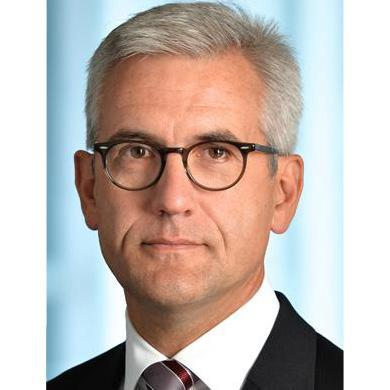
Although there was a lot of marketing buzz to sort through, what ABB gets with a partnership with Salesforce is substantial. The company under the leadership of Ulrich Spiesshofer for the past five years has staged a remarkable turnaround. Don’t forget it also bolstered its machine control / discrete manufacturing portfolio with the acquisition of B+R Automation.
You can see more by watching this Fireside Chat with ABB CEO Ulrich Spiesshofer and Salesforce chairman and co-CEO Marc Benioff on the future of work and Fourth Industrial Revolution.
The stated objective of the partnership is for Salesforce to provide a single view of customers across ABB’s global sales, service and marketing operations.
The partnership will combine the power of Salesforce IoT, Einstein artificial intelligence, and ABB Ability, the cross-industry digital offering supporting an installed base of 70 million connected devices worldwide, to drive enhanced service and faster solutions for customers
Explaining Industry 4.0, otherwise known as The Fourth Industrial Revolution, Salesforce states it is a wave of innovation and technology that is radically transforming every business and industry. It’s no longer enough for manufacturers to differentiate on product—they must also predict customer needs and deliver smarter, more personalized customer experiences. With Salesforce, ABB is unifying its CRM globally, across every region, brand and department, to embrace the opportunities created by the Fourth Industrial Revolution and help its customers pursue important, new openings for service, innovation and growth.
“The Fourth Industrial Revolution is creating massive opportunities for our customers, making the work we do with them to drive innovation and create value more important than ever,” said Ulrich Spiesshofer, CEO of ABB. “That’s why we’re growing our relationship with Salesforce. The wealth of information we’ll get by unifying our data on Salesforce and combining it with our ABB Ability digital offering will allow us to use artificial intelligence and IoT more effectively, so we can anticipate our customer’s needs and write the future together.”
“ABB is undergoing incredible digital transformation and connecting with their customers in revolutionary ways,” said Marc Benioff, Chairman and co-CEO of Salesforce. “Our relationship with ABB is another example of the extraordinary power of artificial intelligence and IoT technologies to drive customer success.”
ABB’s expansion of Salesforce includes Einstein, Salesforce IoT, Sales Cloud, Service Cloud, Marketing Cloud, Community Cloud and Success Cloud advisory services.
Einstein will enable ABB to drive smarter sales and service with artificial intelligence. For example, ABB will use Sales Cloud Einstein for intelligence-driven decision making, automated data entry, identification of potential opportunities and predictive forecasting. Einstein Vision, used with Service Cloud Field Service Lightning, will be used to give ABB’s 15,000 field service technicians the ability to take a photo of an ABB product or component when they arrive onsite to automatically surface information about the product on their screens, resulting in faster, more accurate service.
Salesforce IoT will allow ABB to make data from its connected devices actionable and measurable. The company’s vision is to combine Salesforce IoT with ABB Ability so that its installed base of 70 million connected devices can use predictive intelligence, powered by Einstein, to generate and trigger actions directly into Salesforce. With Salesforce IoT and ABB Ability together, ABB will be able to improve customer experiences by getting ahead of performance and maintenance needs.
by Gary Mintchell | Aug 16, 2018 | Data Management, Internet of Things, Operations Management
The CEO of Zededa told me in an interview a few months ago that his mission was no less than to build the largest computing company on Earth without owning infrastructure. Its vision—create a new edge economy that allows applications to run anywhere.
When I wrote in April, the company was emerging from stealth mode. Its most recent announcement proclaims:
- First demonstrable cloud-native platform for edge applications, early customer access to end-to-end app operations platform purpose built for the edge underway
- Zero-touch infrastructure modernization for legacy embedded systems; simple to move legacy apps and OS from outdated systems to newer, cloud-native edge hardware
- Zededa joins EdgeX Foundry to bolster the organization’s vision of an open and secure cloud-native future that enables all new IoT applications
- Major edge system vendors turning to Zededa for operational automation, insights and protection of applications running on their systems
Zededa announced early access to its platform that provides real-time apps a simple “on-ramp” to the cloud-native edge. From legacy embedded systems to modern, AI-based IoT apps, the platform provides the scalability, security and visibility required to allow operations teams to unlock the power of real-time apps without concerns about bandwidth, latency or dependency on the cloud.
Operations technology teams have three primary situations to deal with when it comes to IoT applications: how to upgrade and secure a massive install base of legacy embedded systems, how to retrofit existing equipment with IoT sensors and applications to take advantage of real-time data, and how to deploy entirely new applications like AI-powered robots and self-driving fleets.
Closed, monolithic systems at the edge—either closed by design or closed because of legacy embedded device development workflows—are the last major impediment to solving these problems and enabling IoT to achieve its stated $1.3 trillion market potential. Zededa’s platform demonstrates how cloud-native edge solves the most urgent problem for organizations looking into digital transformation—upgrading and protecting legacy systems without truck-rolls—and gives solution providers a way to easily adopt IoT sensors and industrial gateways to provide real-time data to operational software. Initial natively-supported hardware partners include platforms built on ARM and Intel x86 processors from leading vendors including Advantech Corporation, Lanner, SuperMicro, and Scalys.
“Cloud-native edge computing will be a diverse universe unlike anything in cloud datacenters today,” said Roman Shaposhnik, VP of Product and Strategy at Zededa. “We are making the modernization of edge infrastructure secure, simple and automated in preparation for a fundamental shift away from legacy embedded systems. An open system that allows BYO hardware into a cloud-native platform is a start of the future: a computing environment that is distributed, autonomous and cooperative.”
To help drive entirely new applications and operational possibilities at the edge across a diverse universe of devices, Zededa has joined EdgeX Foundry, a vendor-neutral open source project hosted by The Linux Foundation with a goal to build a common open framework for IoT edge computing.
“Interoperability and convergence on common industry standards is vital for organizations deploying next-generation distributed computing solutions at the IoT Edge,” said Jason Shepherd, Chair of EdgeX Foundry Governing Board and Dell Technologies IoT CTO. “By joining EdgeX Foundry’s efforts Zededa will help promote the project’s important work of creating an open ecosystem of secure, interoperable edge applications that will change user experiences and drive the future of business.”
Currently providing early access to select customers, Zededa is accepting sign-ups for demonstrations and private briefings.
Founded in 2016, Zededa is pioneering a cloud-native approach to the deployment, management and security of real-time edge applications at hyperscale for solutions ranging from self-driving cars to industrial robots. Zededa is headquartered in Santa Clara, CA with engineering and market development teams based in India, UK, Germany and Korea.
EdgeX Foundry is an open source project hosted by The Linux Foundation building a common open framework for IoT edge computing and an ecosystem of interoperable components that unifies the marketplace and accelerates the deployment of IoT solutions. Designed to run on any hardware or operating system and with any combination of application environments, EdgeX enables developers to quickly create flexible IoT edge solutions that can easily adapt to changing business needs.
by Gary Mintchell | Aug 15, 2018 | Data Management, Interoperability, Operations Management
I’m interested in where all this IoT, IT/OT convergence, and digital transformation technology is taking us. This survey on platforms is revealing. Nearly forty percent of respondents are using Platform as a Service (PaaS), containers, and serverless technologies together for flexibility and interoperability.
Companies are using different cloud-native technologies side-by-side at an increasing pace to build both new cloud-native applications and to refactor traditional applications, according to the latest report <https://www.cloudfoundry.org/multi-platform-trend-report-2018> released by the Cloud Foundry Foundation <http://www.cloudfoundry.org/>, home of the most widely-adopted open source cloud technologies in the world.
“As IT Decision Makers settle into their cloud journey, they are more broadly deploying a combination of available platforms, including PaaS, containers and serverless,” said Abby Kearns, Executive Director, Cloud Foundry Foundation. “In this multi-platform world, it should come as no surprise that, as they become more comfortable with these tools, IT decision makers are searching for a suite of technologies to work together. They want technologies that integrate with their current solutions in order to address their needs today—but are flexible enough to address their needs in the future.”
Key Findings include:
• A Multi-Platform World:Technologies are being used side by side more than ever before. IT decision makers report 77 percent are using or evaluating Platforms-as-a-Service (PaaS), 72 percent are using or evaluating containers and 46 percent are using or evaluating serverless computing. More than a third (39 percent) are using a combination of all three technologies together.
• A Mix of New Cloud-Native and Refactoring Legacy Applications:57 percent of IT decision makers report their companies do a mix of building new cloud-native applications and refactoring existing applications, an increase of nine percentage points from late 2017.
• Containers Have Crossed the Chasm: For companies choosing to develop new or refactor existing applications, they are choosing containers.
• Serverless is on the Upswing: Serverless computing is being evaluated with rapid momentum. Only 43 percent of respondents are not using serverless and 10 percent more companies are evaluating serverless than in 2017.
• PaaS Usage Continues to Swell: PaaS is being more broadly deployed than ever before and companies are developing new cloud-native applications at increased momentum. It stands to reason that these two upsurges happen in tandem. This growth in usage is bolstered by the 62 percent of IT decision makers who report their companies save over $100,000 by using a PaaS.
• Flexibility and Interoperability are Key: IT decision makers ranked “Integration with existing tools” and “Flexibility to work with new tools” in the top five attributes in a platform, alongside Security, Support, and Price.
Less than six months ago, the Foundation’s 2017 report “Innovation & Relevance: A Crossroads on the Cloud Journey <https://www.cloudfoundry.org/cloud-journey-report/>” indicated IT decision makers were advancing in their cloud journeys. In 2016, IT Decision Makers reported a lack of clarity around IaaS (Infrastructure-as-a-Service) and PaaS (Platform-as-a-Service) technologies, and most were still in the evaluation stages. By late 2017, they had progressed to selection and broader deployment of cloud solutions. Twenty percent report of IT decision makers report primarily building new cloud-native applications, up five percentage points from last year, while 13 percent say they are primarily refactoring, a drop of 11 points. As an increasing number of companies are developing new cloud-native applications, PaaS is being broadly deployed by more companies than ever. It stands to reason that these two upsurges happen in tandem.
Cloud Foundry Application Runtime is a mature and growing cloud application platform used by large enterprises to develop and deploy cloud-native applications, saving them significant amounts of time and resources. Enterprises benefit from the consistency of Cloud Foundry Application Runtime across a variety of distributions of the platform, thanks to a Certified Provider program. Cloud Foundry Container Runtime combines Kubernetes with the power of Cloud Foundry BOSH, enabling a uniform way to instantiate, deploy and manage highly available Kubernetes clusters on any cloud, making deployment, management and integration of containers easy.
To receive a copy of the survey, go here <https://www.cloudfoundry.org/multi-platform-trend-report-2018>. The survey was conducted and produced by ClearPath Strategies <http://www.clearpath-strategies.com/>, a strategic consulting and research firm for the world’s leaders and progressive forces.
Cloud Foundry is an open source technology backed by the largest technology companies in the world, including Dell EMC, Google, IBM, Microsoft, Pivotal, SAP and SUSE, and is being used by leaders in manufacturing, telecommunications and financial services. Only Cloud Foundry delivers the velocity needed to continuously deliver apps at the speed of business. Cloud Foundry’s container-based architecture runs apps in any language on your choice of cloud — Amazon Web Services (AWS), Google Cloud Platform (GCP), IBM Cloud, Microsoft Azure, OpenStack, VMware vSphere, and more. With a robust services ecosystem and simple integration with existing technologies, Cloud Foundry is the modern standard for mission critical apps for global organizations.
The Cloud Foundry Foundation is an independent non-profit open source organization formed to sustain the development, promotion and adoption of Cloud Foundry as the industry standard for delivering the best developer experiences to companies of all sizes. The Foundation projects include Cloud Foundry Application Runtime, Cloud Foundry Container Runtime, BOSH, Open Service Broker API, Abacus, CF-Local, CredHub, ServiceFabrik, Stratos and more. Cloud Foundry makes it faster and easier to build, test, deploy and scale applications, and is used by more than half the Fortune 500, representing nearly $15 trillion in combined revenue. Cloud Foundry is hosted by The Linux Foundation and is an Apache 2.0 licensed project available on Github:https://github.com/cloudfoundry. To learn more, visit:http://www.cloudfoundry.org <http://www.cloudfoundry.org/>.
by Gary Mintchell | Jul 27, 2018 | Internet of Things, Organizations
Platforms that serve to expedite the interaction and collaboration of apps in the Internet of Things (IoT) are sort of the next new thing. There are several that some of the IT analyst firms are following. Trouble is the term allows for a wide variety.
One I’ve written about several times here and here and here is open source developed under the auspices of the Linux Foundation with major leadership and contributions by Dell Technologies. It’s called the EdgeX Foundry. The initiative includes 47 member companies.
The second major release of the platform (California) has just seen the light of day. I picked up information from a blog post by Jim White, Vice Chair of the Technical Steering Committee and Distinguished Engineer and Project Lead of the IoT Platform Development Team within Dell Technologies IoT Solutions Division.
Following is a lightly edited version of his blog concerning the announcement.
While EdgeX is only a year old, our community is demonstrating its staying power with the second major release in its first year. The California release, which follows Barcelona, shows the commitment and dedication of many who see the importance and potential of developing a flexible, open source, IoT software platform for the edge that provides connectivity and interoperability while still allowing value add.
So, what is new with the California release? A lot! But before we get into the details, I want to highlight that the biggest focus of this release was to introduce a few key security capabilities and to make EdgeX smaller and faster.
Security
EdgeX began its existence without security and organizations wanting to leverage the platform had to add their own security capability. Today, EdgeX incorporates some of the first security elements. These initial elements, while useful on their own, are essential building blocks to additional security features in the future.
The first security elements include a reverse proxy that helps protect the REST API communications and a secrets store. With the EdgeX reverse proxy in place – as provided by incorporating an open source product called Kong – any external client of an EdgeX micro service must first authenticate themselves before successfully calling on an EdgeX API.
The secure storage facility was provided by incorporating the open source Vault (Hashicorp) product, and it allows items such as username/password credentials, certificates, secure tokens, etc. to be persisted and protected within EdgeX. These types of “secrets” will allow EdgeX to, for example, encrypt data, make HTTPS calls to the enterprise, or connect EdgeX to a cloud provider in a secure manner.
Performance and Scalability
The EdgeX Foundry Technical Steering Committee decided early last year in the project’s formation that we would release twice a year – once in April and once in October. You probably noticed that it’s not April.
Last year, we decided that EdgeX needed to be smaller and faster to better function effectively at “the edge”, which the largely-Java code from the seed donation was going to make difficult. To do this, we needed to rebuild the EdgeX microservices in Go Lang – and do so by our spring 2018 release. This was not a small endeavor and it was made at a time when the EdgeX Foundry developer community was just coming on board. We knew it would take a bit more time, but we were committed to this, and added two more months to this release cycle.
The extra time was well worth it! With the California release, we’ve dramatically lowered the footprint, startup time, memory and CPU usage. Take a look at the statistics below, which compares services from our first community release last October (Barcelona) to our current release (California).

We still have work to do, but it’s now possible to run all of EdgeX on something like a Raspberry Pi 3.
Additional Features
In addition to the initial security capabilities and reducing the size and latency of the platform, this release includes other work – some visible to the user while some features are more hidden but improve the overall quality of EdgeX.
• Several additions were made to the export services to provide additional “northbound” connectivity, to include connectors for XMPP, ThingsBoard IoT, and Brightics IoT
• We improved the documentation and now have documentation stored with the code in Github – allowing it to be maintained and updated more like code by the community
• Arm 64 is now fully supported. In fact we worked with the Linux Foundation to add external environments and tools to create native Arm 64 artifacts.
• We added blackbox tests for all the micro services. These are now kicked off as part of our build and continuous integration processes.
• Other improvements were made to our continuous integration – to help streamline developer contributions
On to Delhi
Our next release, named Delhi, will come out in October 2018. Due to the extended release cycle for California, the Delhi release cycle is going to be short. The significant features planned for Delhi include:
• Initial manageability services and capability
• Device Service SDKs (Go/C) and at least one example device service
• The next wave of security features to include access control lists to grant access to appropriate services and improved security service bootstrapping
• Better/more unit testing and added performance testing
• Adding the last of the refactored and improved Go Lang microservices
• Outlining options and a potential implementation plan for alternate or additional database support
• An EdgeX UI suitable for demos and smaller installations